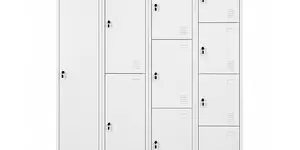

Step into a workplace locker room, and you will almost certainly see rows of lockers lining the walls. However, the material of these lockers—whether steel or plastic—has a far greater impact than most managers realize. A poor choice can lead to rusting doors within just a few years, frequent repair costs, and employee dissatisfaction, whereas the right choice ensures decades of reliable service with minimal maintenance.
This guide breaks down the real-world differences between steel and plastic lockers across durability, cost, maintenance, security, and environmental suitability. By the end, you will have a clear framework for deciding which material belongs in your workplace.
Understanding the Two Contenders
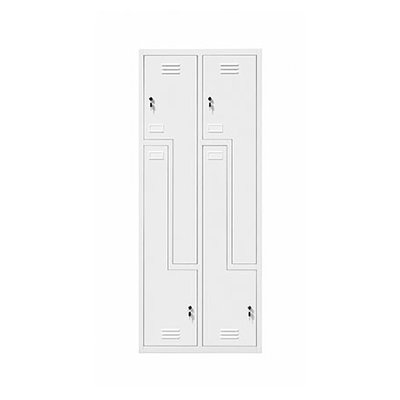
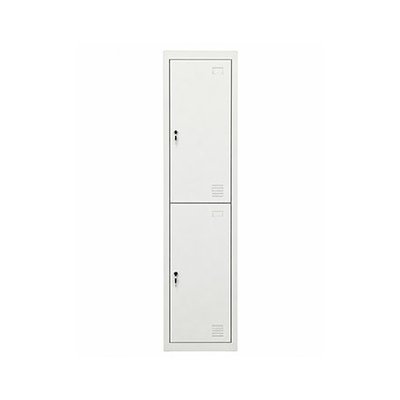
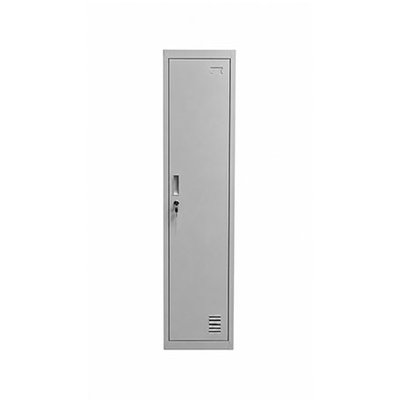
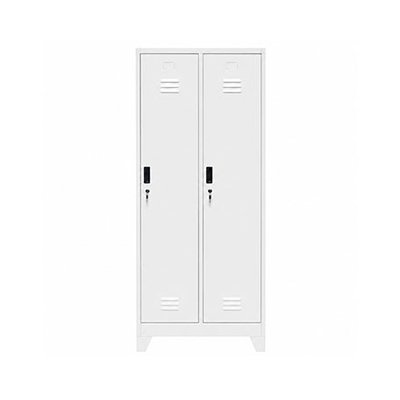
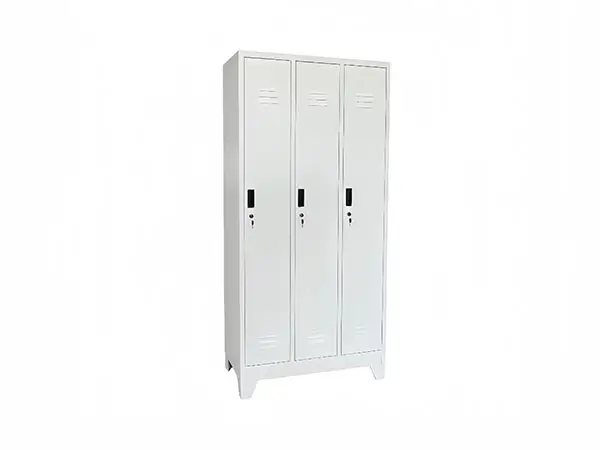
Steel lockers have been the industry standard for decades. Most commercial steel lockers are constructed from cold-rolled sheet steel with a powder-coated finish. The steel gauge—a measure of thickness—typically ranges from 24 gauge for regular-duty units to 20 gauge or even 16 gauge for heavy-duty applications. A standard configuration might feature 24-gauge frames with 22-gauge doors. The powder coating provides both color and corrosion protection.
Plastic lockers, by contrast, are a more recent innovation that has gained significant traction over the past decade. The vast majority of high-quality plastic lockers are made from high-density polyethylene (HDPE), a rigid, high-tensile-strength material that is UV-stabilized and water-resistant. Some manufacturers also use ABS (acrylonitrile butadiene styrene) plastic. HDPE lockers typically feature 4.5mm-thick panels, with sides, tops, bottoms, and shelves constructed from solid HDPE.
Durability and Impact Resistance: A Tale of Two Materials
The most fundamental difference between steel and plastic lockers lies in how they respond to physical force and environmental exposure.
Steel lockers excel in impact resistance. Metal has higher structural strength than most plastic locker bodies. In shared environments where lockers get slammed, leaned on, overloaded, and hit by carts or cleaning equipment, steel holds up better under physical abuse. Heavy-gauge steel (16 to 20 gauge) resists denting under daily impact and heavier stored loads. A well-constructed steel locker with a powder-coated finish provides a robust platform for locking mechanisms, with reinforced areas around hinges and latch points.
However, steel has a critical vulnerability: corrosion. Over time, metal lockers are prone to rust, especially in damp or humid areas. In environments with wet clothing, snow, and salt on boots, metal lockers rust from moisture exposure. Even with powder coating, moisture that penetrates damaged areas can lead to corrosion. Standard powder-coated steel typically offers salt-spray resistance of 500 to 1,000 hours under ASTM B117 testing, but once the coating is scratched or chipped, the underlying steel becomes vulnerable.
Plastic lockers take the opposite approach. HDPE lockers simply do not rust. They withstand water damage far better than metal ones, and you never have to worry about paint chipping or corrosion. The material is impervious to moisture and resists damage from most common chemicals. HDPE lockers are also resistant to scratches and easier to repair than metal lockers.
The trade-off is impact resistance. Plastic units generally are not as impact-resistant as steel, making them a better fit for environments with moisture exposure rather than heavy physical abuse. While HDPE lockers can withstand over 1,000 kg of force to the entire locker system, they can flex under load in larger door formats or high-frequency applications.
Lifespan: How Long Will Each Material Last?
Lifespan data varies significantly depending on quality and usage conditions, but several authoritative sources provide clear benchmarks.
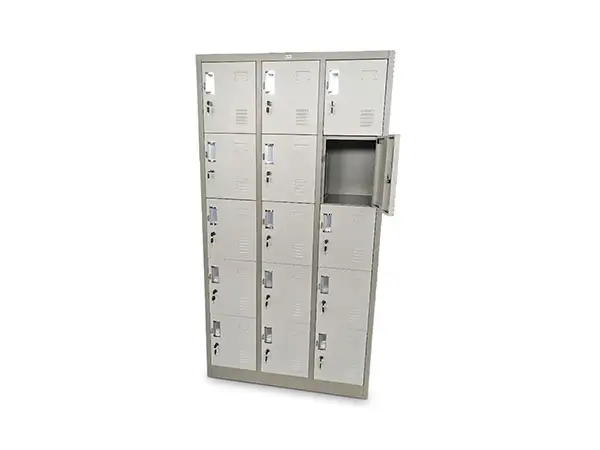
Steel lockers typically last 10 to 15 years under normal use. Some sources indicate metal lockers last approximately 15 years before requiring replacement. However, this lifespan depends heavily on the environment. In damp conditions, steel lockers can show signs of rust within 2 to 3 years. With proper maintenance—including periodic repainting and door replacements—some steel lockers can extend beyond 15 years, but the maintenance costs accumulate significantly.
Plastic lockers offer substantially longer service lives. HDPE and ABS plastic lockers often remain serviceable for 15 to 25 years under similar conditions. Some manufacturers provide 20-year warranties against rust, corrosion, denting, and delaminating under normal use. ABS plastic lockers can be used for 20 to 30 years. Unlike metal, plastic lockers do not require repainting or corrosion treatment, and their color goes all the way through the material, so scratches do not reveal a different color underneath.
Cost Analysis: Upfront Price vs. Total Cost of Ownership
The cost picture is more nuanced than a simple comparison of purchase prices.
Upfront costs: Basic steel staff lockers typically start around $200 to $500 per locker position, depending on size, gauge, and whether units are assembled or banked. More durable ventilated steel options can run higher. Installed metal locker pricing generally ranges from $400 to $900 per locker installed. Plastic lockers, particularly HDPE units, commonly move into the $700 to $1,000-plus range per locker position. Quality plastic lockers often carry a higher initial price than steel.
Total cost of ownership: This is where the comparison shifts dramatically. While steel lockers cost less upfront, they often cost more over time. Consider the 20-year lifecycle of 100 lockers. Maintaining 100 metal lockers for 20 years with four paint jobs and two door replacements per locker would cost approximately $21,000. Plastic lockers require $0 for painting and door replacements over the same period.
One manufacturer's analysis puts it in stark terms: over a 20-year lifecycle, the cost of steel lockers can be 7 to 8 times higher than that of ABS plastic lockers when factoring in maintenance and replacement. Another source notes that within two years, HDPE options become less expensive than metal when accounting for painting, maintenance, and cleaning. Over five years, high-quality plastic lockers can be 40 to 50 percent cheaper overall than alternatives. Lenox Lockers, an HDPE manufacturer, claims up to 50 percent lifecycle cost savings with their plastic lockers compared to metal.
Security: Which Material Offers Better Protection?
Security is rarely just about the lock cylinder—it is also about the material surrounding the lock.
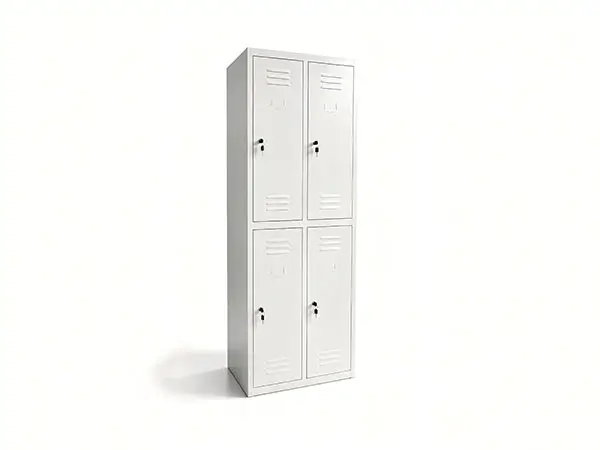
Steel lockers generally offer superior physical security. Metal provides a stronger platform for key locks, hasps, digital locks, RFID systems, and master key arrangements. The lock area can be reinforced, and the door-to-frame fit can be controlled more tightly. In workplaces storing uniforms, devices, tools, documents, or personal items, this added integrity matters. Steel lockers are difficult to break into, offering peace of mind in high-traffic workplaces.
Plastic lockers have a clear limitation in this area: they do not provide the same level of physical security as heavy-gauge steel. Plastic lockers are not appropriate for storing high-value items in environments where forced entry is a concern. Depending on construction, plastic may offer less resistance to forced entry. For low-risk use, this may be acceptable, but for commercial and institutional use, it often is not.
For workplaces storing expensive equipment, sensitive documents, or high-value personal items, steel lockers are the more secure choice.
Moisture, Hygiene, and Cleaning
This category represents one of plastic's strongest advantages.
Plastic lockers excel in wet environments. HDPE is impervious to moisture, resists mold and mildew, and naturally inhibits bacterial growth. Testing shows that within 24 hours, 98 percent of MRSA bacteria naturally dies off the surface of HDPE plastic without the use of any cleaning solutions. Some HDPE lockers carry an antimicrobial efficacy rating of 4.0 or greater under JIS Z 2801 testing, with 99.99 percent kill effectiveness against E. coli, MRSA, and Staph.
Plastic lockers can withstand strong cleaning agents, disinfectants, and chemical spills without damage. They are UV-stable and weather-resistant, making them ideal for both indoor and outdoor workplace settings. HDPE lockers are also graffiti-resistant, with spray paint and markers easily removed using standard cleaning products.
Steel lockers require more careful maintenance in wet environments. While powder-coated steel lockers can be wiped down and support good hygiene, moisture that penetrates the coating leads to rust. In healthcare settings, steel is often the lower entry-cost option, but HDPE and laminate options tend to hold up better in damp, high-cleaning environments. The CDC recommends regular cleaning of locker facilities to prevent MRSA and other infections, and plastic lockers make this easier with their non-porous, chemical-resistant surfaces.
Environmental Suitability: Where Does Each Material Belong?
The right locker material depends heavily on where it will be installed.
Steel lockers are best for:Indoor workplaces with controlled humidity.High-traffic areas where impact resistance is critical.Environments requiring maximum security.Manufacturing plants, warehouses, and industrial facilities.Schools and universities.General office staff storage.Steel lockers are less suitable for wet or outdoor environments unless additional treatment is applied. In coastal areas with salty air, corrosion becomes a significant concern.
Plastic lockers are best for:.Aquatic centers, pools, and water parks.Outdoor facilities and coastal environments.Hospitals and healthcare settings.Gyms and changing rooms with high moisture.Any environment requiring frequent chemical cleaning.Construction sites.Plastic lockers are not ideal for environments with direct sunlight or excess heat unless specifically UV-stabilized. High-quality HDPE lockers address this with UV stabilization.
Noise Considerations
An often-overlooked factor is noise. Metal lockers produce a characteristic clang when doors open and close—a noisy material in daily use. Plastic lockers operate more quietly, with spring-loaded door latches that reduce noise. In office environments where noise carries, this difference can be meaningful for employee comfort..
The Verdict: Which Is Better for Your Workplace?
There is no universal answer to the steel-versus-plastic question. The better choice depends entirely on your specific workplace conditions and priorities.
Choose steel lockers if:.Your primary concern is physical security and impact resistance.Your workplace is indoors with low to moderate humidity.You have a lower upfront budget and can manage periodic maintenance.You are storing high-value items that require robust protection.Your facility experiences heavy physical use from carts, equipment, or high traffic.
Choose plastic lockers if:Your workplace has high moisture, humidity, or frequent wet items.You want minimal long-term maintenance and lifecycle costs.Hygiene and easy cleaning are top priorities.Your lockers will be installed outdoors or in coastal areas.You prefer quieter operation and a modern appearance.
For most workplaces, the data points toward a clear trend: plastic lockers offer superior long-term value in moisture-prone environments, while steel remains the better choice for high-security, high-impact settings. The upfront price premium of plastic is typically offset within two to five years by lower maintenance costs, and the lifespan advantage—15 to 25 years for plastic versus 10 to 15 years for steel—makes the total cost of ownership significantly lower over a 20-year horizon.
The key is to match the material to the environment. A steel locker in a dry office will serve well for a decade or more. A steel locker in a pool changing room will rust within a few years. A plastic locker in a manufacturing plant may flex under heavy loads. Understanding these trade-offs ensures you make a decision that protects both your employees' belongings and your facility's budget.
Before you purchase, assess your specific environment, consider the total cost of ownership rather than just the sticker price, and choose the material that aligns with your facility's unique demands. The right choice today will save you thousands of dollars and countless maintenance headaches over the life of your lockers.