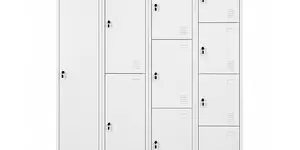

For offices, workshops, and industrial facilities, steel drawer cabinets remain a durable and versatile storage solution. However, simply owning a high-quality steel cabinet is not enough; the real challenge lies in utilizing it effectively. A disorganized interior wastes time and reduces productivity, ultimately causing promising ideas to fall flat. Drawing on practical data and real-world applications, this guide shows you how to make the most of every inch of storage space in your steel drawer cabinets.
Start With an Honest Assessment of What You Actually Need
Before you reorganize a single drawer, you need to understand what you are storing and how you use it. Many professionals make the mistake of purchasing a cabinet and then trying to force their belongings into it, rather than selecting a solution that fits their actual requirements.
Choosing the right cabinet size matters more than most people realize. A standard four-drawer vertical cabinet—the most common office configuration at 52 inches tall, 15 inches wide, and 26 inches deep—can store approximately 100 linear inches of files. Each drawer typically holds between 250 and 300 file folders, with each folder containing 50 to 100 sheets depending on paper weight. That means one drawer can store up to 15,000 sheets, and a full four-drawer cabinet can hold roughly 60,000 documents.
Consider also leaving room to grow. If you are storing fasteners or parts that accumulate over time, choose a cabinet size that accommodates future needs. Adding a drawer for categories that expand prevents the need for a complete system overhaul down the line.
Choose the Right Cabinet Type for Your Space
Not all steel drawer cabinets are created equal, and the choice between vertical and lateral configurations significantly impacts how much you can store.
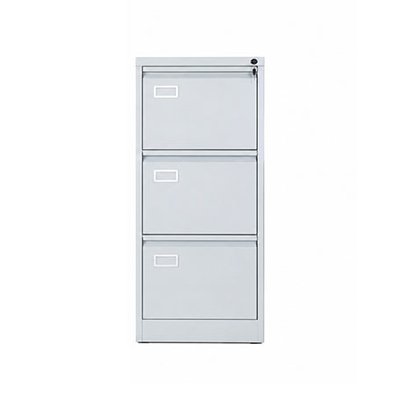
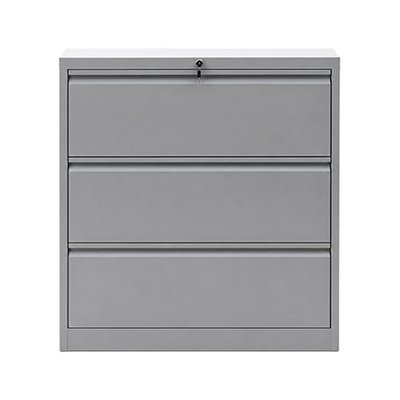
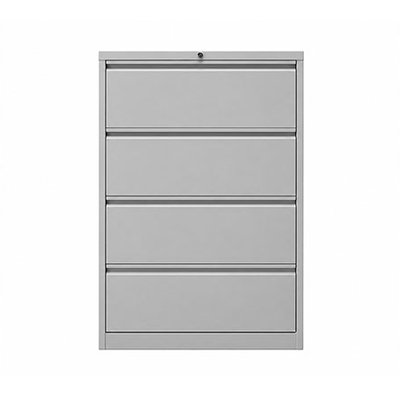
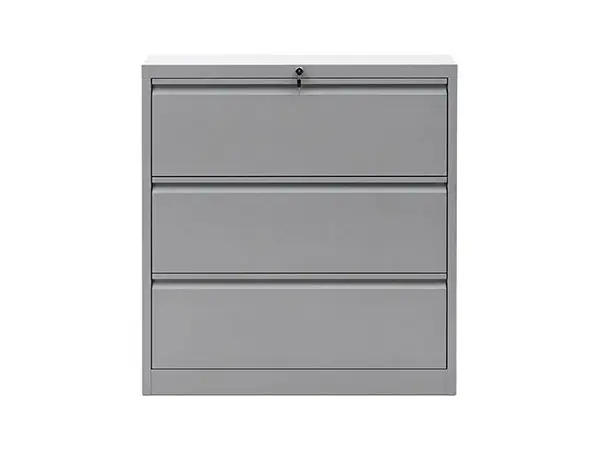
Vertical file cabinets are tall and narrow, making them ideal for small offices and tight floor spaces. These cabinets store folders front-to-back and require less floor area but deeper reach. Lateral file cabinets, by contrast, are wide and low-profile, storing folders side-to-side for easier access without deep digging. Lateral cabinets work best in larger offices where wall space is plentiful.
For manufacturing and workshop environments, modular drawer cabinets offer unparalleled organization for small parts and tools. These systems often comprise up to 90 percent of the storage space in well-organized tool cribs. The numbers speak for themselves: each 30-inch by 30-inch modular drawer cabinet replaces approximately five traditional 36-inch by 24-inch steel shelving units. That represents a dramatic reduction in floor space while maintaining or even increasing storage capacity.
Leverage Vertical Space Through Smart Stacking
One of the most overlooked opportunities for maximizing storage is vertical space. Stackable steel cabinets allow you to build upward rather than outward, dramatically increasing capacity without expanding your footprint.
Modular stackable cabinets feature interlocking units that integrate seamlessly, supporting customizable height configurations that adapt as your workspace needs evolve. For offices with limited floor area, choosing cabinets at least 1.5 meters tall and placing them against walls fully utilizes vertical real estate.
The space savings from vertical optimization are substantial. Vertical storage can save up to 40 percent of floor space compared to horizontal storage alternatives. In practical terms, this means you can store the same volume of materials in significantly less square footage, freeing up valuable workspace for other purposes.
Organize Drawers With Adjustable Dividers and Compartments
Raw drawer space is useless without proper internal organization. The most effective way to maximize drawer capacity is through adjustable dividers that create customized compartments based on the size and shape of your items.
Drawer divider kits are designed specifically to optimize internal drawer organization, creating structured and configurable compartments for tools, hardware, and office supplies. These systems improve visibility, reduce clutter, and support efficient workflow. When you can see everything at a glance, you spend less time searching and more time working.
For offices, the "nested compartment" approach has proven remarkably effective. One medical office project implemented drawers with adjustable dividers that could switch between storing files and lab equipment, combined with vertical stacking rails that added shallow trays atop deeper compartments. The result was a 35 percent increase in storage density without expanding the cabinet footprint.
For workshops, insert trays with adjustable dividers allow you to fine-tune compartment widths as your inventory changes. One tray style even offers customizable compartment sizing, so you are not locked into fixed configurations that become obsolete. Small plastic bins placed inside compartments create a second organizational layer, useful for grouping items by size within a larger tray.
Follow the 80/20 Rule for Drawer Loading
A crucial but often ignored principle is the 80/20 rule of filing: never fill a drawer more than 80 percent full. Overstuffing damages both the cabinet and the contents, makes retrieval difficult, and accelerates wear on drawer slides and mechanisms.
When a drawer exceeds 80 percent capacity, files become compressed and difficult to access. The friction between folders increases, making it harder to insert new materials and extract existing ones. This inefficiency compounds over time, turning what should be a quick retrieval into a frustrating struggle.
The weight capacity of steel cabinet drawers varies by construction quality and gauge thickness. High-quality steel cabinets typically hold 75 to 100 pounds per drawer. Some heavy-duty modular cabinets support up to 400 pounds per drawer. However, even the most robust cabinet will fail prematurely if consistently overloaded. Respecting the 80 percent rule preserves both the cabinet's mechanical integrity and your sanity.
Implement a Logical Filing and Retrieval System
Organization without a system is just neat chaos. The most efficient steel drawer cabinets follow a clear, logical structure that anyone in the workspace can understand and follow.
Start by categorizing your documents or items into broad groups before placing them in the cabinet. Common categories might include financial records, personnel files, project documents, contracts, and reference materials. Assign each category to a specific drawer or section.
Place the most frequently accessed items in the top drawers to avoid constant bending and reaching. Archive files and rarely used materials belong in the bottom drawers. This principle—often called "frequent near, archive far"—reduces daily movement and search time significantly.
Label everything clearly and consistently. Avoid vague names like "Miscellaneous". Instead, use specific, descriptive labels that include core keywords. For cabinets with transparent label slots, position labels facing outward for immediate identification. A color-coding system can further speed up retrieval by assigning colors to departments or document types.
Use Hanging Folders and Vertical Filing Accessories
Hanging folders represent one of the most effective ways to utilize the vertical space within each drawer. By suspending folders from rails, files stand upright like books on a shelf, making them easy to browse, insert, and remove.
This vertical orientation also increases capacity. Files stored upright take up less horizontal space than stacked flat, allowing more documents per drawer. The difference is substantial enough that many offices report doubling their effective storage capacity simply by switching from stacked to hanging file organization.
For deep drawers, consider multi-level file racks that create stepped tiers, making every document's header label visible at a glance. This approach eliminates the need to flip through stacks of folders to find what you need.
Maintain Your Cabinet With Regular Purges
An efficient steel drawer cabinet is a living system, not a document cemetery. Regular maintenance and purging are essential to keep storage capacity maximized.
Schedule periodic reviews—quarterly or at minimum annually—to assess what you are storing. Destroy documents past their retention period. Transfer long-term archives that are rarely accessed to dedicated storage cabinets or off-site facilities. These practices free up prime drawer space for active materials that actually need daily access.
Create a "use it or lose it" mindset around cabinet space. If a file has not been touched in two years, it likely does not belong in a primary storage cabinet. Move it to archive storage and reclaim the valuable drawer real estate.
Beyond content purging, maintain the cabinet itself. Clean surfaces and tracks regularly with a soft cloth. Check drawer slides for smooth operation and lubricate them when necessary. Ensure locking mechanisms function properly to protect sensitive materials.
Consider Mobile and Under-Desk Configurations
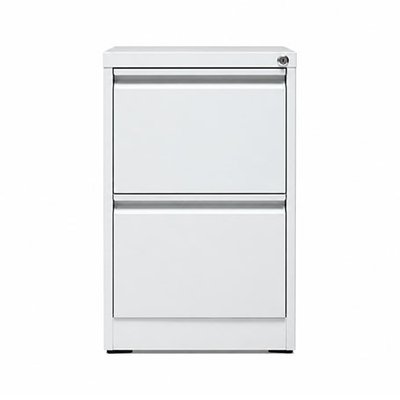
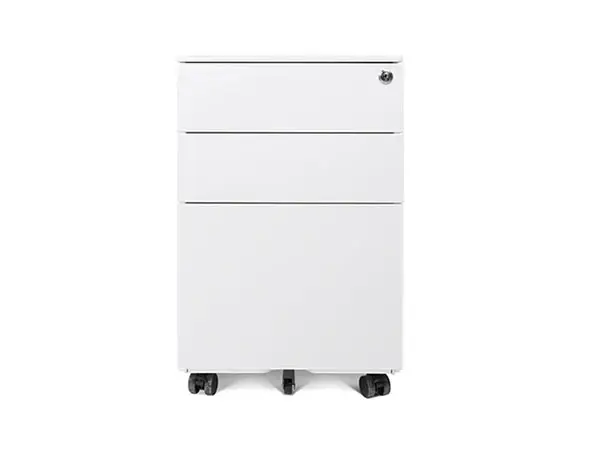
For truly space-optimized offices, mobility and placement matter as much as internal organization. Two-drawer models fit perfectly beneath workstations, utilizing dead space that would otherwise go unused.
Adding casters to steel cabinets creates mobile storage that can be repositioned as workspace needs evolve. This flexibility is particularly valuable in dynamic office environments where team configurations change frequently.
For workshops, drawer cabinets that double as portable trays offer exceptional versatility. Each drawer can lift out of the rack, turning the cabinet into a set of organized, carryable trays. Carry a drawer to the workstation, grab what you need, and slide it back—a simple system that dramatically reduces trips back and forth.
The Productivity Case for Better Cabinet Organization
The business case for optimizing steel drawer cabinet storage extends far beyond tidiness. A 2022 industry survey by the Business Furniture Alliance found that 68 percent of office managers reported drawer-related inefficiencies, costing an average of 15 hours annually in lost employee productivity.
Fifteen hours per employee per year adds up quickly. For a team of 20, that is 300 hours of lost productivity annually—equivalent to more than seven full work weeks. These hours are spent searching for misplaced documents, wrestling with overstuffed drawers, and dealing with the frustration of disorganized storage.
Beyond time savings, proper organization reduces the risk of lost or damaged materials. When every item has a designated place, accountability improves and misplacement decreases. For industries handling sensitive documents or expensive equipment, this risk reduction alone justifies the investment in better organization systems.
Maximizing steel drawer cabinet storage is not about buying a bigger cabinet—it is about using the one you have more intelligently. From selecting the right size and configuration to implementing adjustable dividers, respecting weight limits, and maintaining regular purges, every step contributes to a more efficient storage system.
The data is clear: proper organization can increase storage density by 35 percent without expanding footprint, replace five shelving units with a single modular cabinet, and save employees 15 hours annually in retrieval time. These are not hypothetical benefits—they are measurable outcomes achievable with the strategies outlined above.
To begin, objectively assess the items to be stored and your usage habits, then select a cabinet configuration that aligns with your space and requirements. Be sure to adhere to the "80% load principle" and maintain the storage system through regular decluttering. You will witness a remarkable transformation of your steel drawer cabinets—evolving from a chaotic "pile of clutter" into an efficient, organized asset that boosts productivity. The time and effort invested now in optimizing storage will pay long-term dividends in the form of enhanced efficiency, seamless access, and hassle-free management.