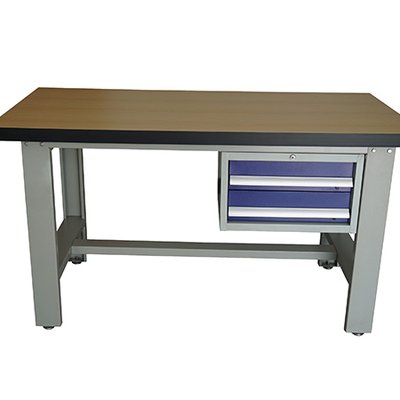

An industrial workbench needs to do more than provide a flat surface. In factories, repair shops, and maintenance areas, it serves as a practical workspace for assembling products, repairing equipment, handling components, and completing everyday tasks.
The right workbench depends on how it will be used, what it needs to support, and how much storage the workspace requires. A well-planned workstation can help employees work more efficiently, keep tools organized, and make better use of available floor space.
From worktop size and load capacity to storage arrangements and customized features, several key considerations can help you choose a workbench that suits your operation.
1. Choose a Worktop That Suits Your Tasks
The worktop is one of the first things to consider when selecting an industrial workbench. Different tasks require different amounts of working space and different surface properties.
For assembly work, a spacious worktop provides room for components, tools, and partially assembled products. In repair and maintenance areas, the surface may need to accommodate heavier equipment, metal parts, and frequently used hand tools.
Think about the size and weight of the items handled during daily operations. A worktop that is too small can restrict movement and leave little room for tools. One that is unnecessarily large may take up valuable floor space.
Worktop material also matters. Consider the type of work performed, how often the surface is used, and how easily it needs to be cleaned. For more specialized environments, such as electronics assembly, additional surface options may be worth discussing with your supplier.
Before ordering, measure the available workspace and consider how much room employees need to handle materials comfortably.
2. Check Load Capacity and Frame Stability
A workbench must support the tools, materials, and equipment placed on it throughout the working day. For industrial use, load capacity and structural stability are essential considerations.
Start by estimating the total weight the workbench will need to support. Consider not only the items placed on the surface but also how the workstation will be used. A bench for light assembly has different requirements from one used to hold heavy components or workshop equipment.
The steel frame, supporting members, and worktop all contribute to the overall strength of the workbench. Buyers should discuss the expected load and suitable structural specifications with their supplier rather than choosing a model based on appearance alone.
It is also worth considering how the workbench will be positioned and used. A stable workstation provides a more reliable surface for everyday tasks, while adjustable feet can help it sit evenly on an uneven floor when needed.
The goal is to match the workbench to the actual workload. Choosing a suitable structure from the beginning can help avoid problems caused by an underspecifiedd workstation.
3. Keep Tools Organized and Within Reach
A cluttered work surface can slow down assembly, repairs, and other routine tasks. Storage features help keep tools and components organized while leaving more room for the work itself.
Drawers are useful for storing hand tools, fasteners, accessories, and smaller components. The number and placement of drawers should reflect what employees need to access most frequently. Depending on the design, drawers can be installed on one side or both sides of the workbench.
For tools that are used throughout the day, a pegboard provides additional storage above the work surface. Hooks and compatible accessories allow frequently used tools to remain visible and easy to reach.
Consider the tools and materials that need to be stored before choosing a configuration. Smaller parts may be easier to organize in drawers, while larger hand tools may be better suited to hanging storage. Combining the two can help make the workstation more practical without taking up unnecessary floor space.
For B2B buyers furnishing multiple workstations, a consistent storage layout can also help employees locate tools more easily across different work areas.
4. Consider Practical Features for Daily Use
Beyond the basic structure and storage, additional features can make a workbench more convenient for specific applications.
For example, a power outlet can be useful at workstations where employees regularly use electric tools or other powered equipment. Its position should allow convenient access without interfering with the working area, and the electrical specifications should meet the requirements of the destination market.
Other features depend on the working environment. Adjustable feet can help level a workbench on an uneven floor, while anti-static options may be appropriate for work involving sensitive electronic components.
These features do not need to be included in every workbench. Instead, consider which ones will make a practical difference to your daily operations. Selecting features based on actual needs helps avoid unnecessary complexity and keeps the workstation focused on its main purpose.
5. Customize the Workbench to Your Application
Different workshops have different requirements, so a standard configuration may not suit every project. A general-purpose assembly station may need a spacious worktop and a few drawers, while an equipment maintenance area may require more storage and additional space for tools.
When planning a customized workbench, consider the following:
① Dimensions: Choose a worktop size that fits the available space and the tasks performed.
② Worktop options: Select a surface suited to the materials handled and the type of work.
③ Load capacity: Match the frame and supporting structure to the expected workload.
④ Drawer arrangements: Decide how many drawers are needed and whether they should be positioned on one side or both sides.
⑤ Tool storage: Consider adding a pegboard to keep frequently used tools accessible.
⑥ Additional features: Discuss power outlets, adjustable feet, or specialized options when the application requires them.
For B2B orders, share your intended application, approximate dimensions, expected load, and storage requirements with the supplier before confirming the design. This makes it easier to evaluate suitable configurations and determine which customization options are worth including.
6. Frequently Asked Questions
What should you look for in an industrial workbench?
Start with the tasks performed, the available workspace, the expected load, and the amount of storage required. These factors help determine the appropriate worktop size, frame structure, and overall configuration.
Can an industrial workbench be customized?
Yes. Depending on the project, customization options may include dimensions, structural specifications, worktop choices, drawer layouts, pegboards, power outlets, and other features. Confirm the available options with your supplier.
How do you choose the right workbench size?
Consider the space available, the size of the materials or equipment handled, and the room employees need to work comfortably. Measure the intended location before ordering, and allow enough clearance for drawers and movement around the workstation.
Should you choose a workbench with drawers or a pegboard?
Drawers are suitable for smaller tools, accessories, and components that need enclosed storage. A pegboard is useful for tools that employees frequently reach for during the day. The two can also be combined, depending on the workbench design.
When should you consider additional workbench features?
Additional features are worth considering when they address a specific need. For example, power outlets can support work involving powered tools, while anti-static options may be relevant to electronics-related applications. Discuss the requirements with your supplier before ordering.
7. Conclusion
Choosing the right industrial workbench starts with understanding the work it needs to support. Worktop size, load capacity, structural stability, and storage layout should form the basis of your decision. Additional features can then be selected according to the working environment and specific operational needs.
At Bestal Furniture, workbench dimensions, structural specifications, drawer arrangements, and selected features can be discussed according to project requirements. Contact us to explore suitable configurations for your factory, workshop, or maintenance facility.