
An office desk is more than a place to put a computer. It affects how employees organize their work, store everyday essentials, and use the available office space. The right desk should provide a practical work surface, convenient storage, and a design that fits the needs of your workplace.
For offices, administrative departments, and commercial environments, choosing a desk involves more than comparing appearance and price. Worktop material, storage capacity, desk layout, and overall dimensions all deserve attention.
Here are the key factors to consider when choosing an office desk for your workspace.
1. Choose a Worktop That Fits Your Needs
The worktop needs to provide enough space for computers, documents, office supplies, and other items used throughout the working day.
Consider how the desk will be used. Employees who work mainly with computers may need room for a monitor, keyboard, and accessories. Administrative staff may also need space for paperwork, folders, and frequently used office equipment.
Worktop material and appearance are important, too. A wood-grain finish can bring warmth to an office and complement different interior styles. Depending on the product specification, composite board materials may also be available as a practical worktop option.
When comparing desks, consider the available surface area, the material, and how the finish will fit into the overall office design.
2. Consider How Much Storage You Need
A well-designed office desk can help keep essential documents and supplies close at hand without leaving the work surface cluttered.
Think about what employees need to store during the day. Documents, stationery, folders, and personal belongings may require different types of storage. Desks with built-in drawers or side cabinets provide convenient space for these items while helping maintain a tidy workspace.
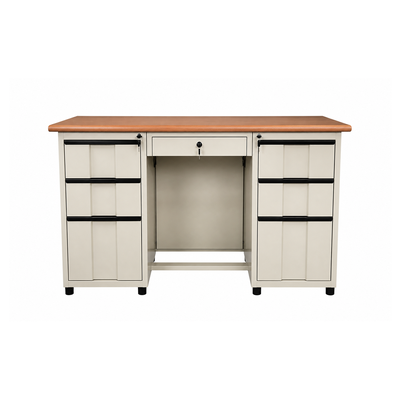
The desk pictured features lockable steel side cabinets and a central drawer, bringing document storage and everyday office essentials together in one workstation. This integrated design helps keep important items organized and the work surface clear.
Before choosing a layout, consider the volume of items to be stored and whether employees need separate spaces for documents, supplies, or personal belongings.
3. Look at the Desk Layout and Available Space
The right office desk should fit comfortably into the workspace and support the way employees work.
Start by measuring the available floor area. Consider the desk's width and depth, as well as the space needed for office chairs, drawers, and walkways. A desk with generous storage may still be inconvenient if it restricts movement or makes nearby furniture difficult to access.
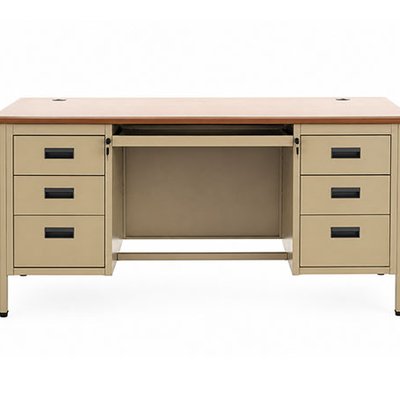
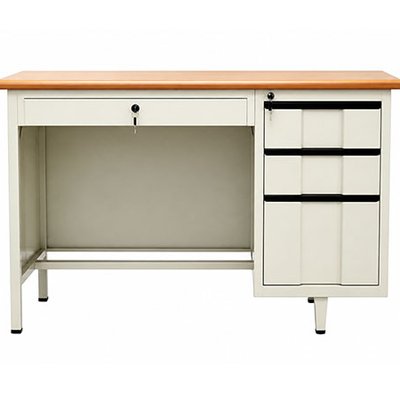
The arrangement of the storage units also matters. Side cabinets provide additional storage, while a central drawer offers a convenient place for smaller items. Consider how employees will sit, move, and access their belongings throughout the day.
For offices purchasing multiple desks, consider the overall layout rather than selecting each desk individually. Consistent desk dimensions and finishes can help create a more organized and coordinated working environment.
4. Consider Security and Everyday Convenience
Office desks often hold more than stationery. Employees may also keep documents, personal belongings, and other items they do not want left openly accessible.
Lockable drawers or cabinets can provide an additional level of storage security. They may be particularly useful in shared offices, administrative departments, and workplaces where several employees use the same area.
Convenience matters as well. Storage should be easy to access, and frequently used items should be kept within reach without interrupting daily work.
When comparing office desks, consider both the storage arrangement and the available locking options. The right combination can help employees keep their work areas organized while managing their belongings more conveniently.
5. Match the Desk Design to Your Office
Office furniture contributes to the overall appearance of a workplace. The desk's color, finish, and proportions should work with the existing furniture and interior design.
A wood-grain worktop paired with steel side cabinets combines a warm, professional appearance with a sturdy structure for everyday office use. The wood-grain finish can complement a range of office interiors, while the steel cabinet design provides integrated storage within the workstation.
It is also worth considering how the desk will look alongside office chairs, filing cabinets, and other storage furniture. Coordinated finishes can help create a consistent appearance across the workspace.
For larger office projects, color and size options may also be discussed according to project requirements. This can help buyers select desks that fit both the available space and the intended interior style.
6. Choose an Office Desk That Suits Your Requirements
Different workplaces have different furniture needs. A compact desk may suit a smaller office, while a workstation with integrated storage may be more appropriate for employees who handle documents and supplies throughout the day.
For B2B buyers, it is useful to consider the desk as part of the wider office furniture plan. Think about how much work surface is needed, what must be stored, and how the desk will fit alongside other furniture.
Depending on the product specification and project requirements, options may include:
① Worktop finishes, including wood-grain appearances.
② Worktop material options, depending on the selected design.
③ Storage layouts, such as steel side cabinets and central drawers.
④ Locking options for drawers or cabinets.
⑤ Desk dimensions and colors to suit the workspace
Discussing these requirements before ordering can help ensure that the selected desk meets practical needs as well as design preferences.
7. Conclusion
Choosing the right office desk means finding a balance between work surface, storage, layout, and appearance. A suitable design gives employees enough room to work, keeps everyday essentials organized, and fits naturally into the office environment.
At Bestal Furniture, we provide office furniture solutions for different workplace requirements. Desk dimensions, worktop options, colors, and storage configurations can be discussed according to project needs.
If you are sourcing office desks for an office fit-out or a larger furniture project, contact us to discuss your requirements and explore suitable options.
8. Frequently Asked Questions
What should you consider when buying an office desk?
Consider the worktop size and material, storage capacity, desk dimensions, and available space. The best choice depends on employees' daily tasks and the layout of the office.
Is a desk with built-in storage a good choice for an office?
A desk with drawers or side cabinets can help keep documents, stationery, and personal belongings organized. It is particularly useful when employees need storage close to their workstations.
Which worktop material is suitable for an office desk?
The right material depends on the intended use, appearance, and product specification. Wood-grain finishes can complement many office interiors, while different board materials may be available depending on the design.
Are steel office desks suitable for everyday office use?
Steel office desks are a practical option for workplaces that need integrated storage and a sturdy desk structure. Models with steel side cabinets and lockable drawers can help organize documents and office essentials while keeping them close at hand. The right choice depends on the desk's construction, storage needs, and intended use.
Can office desks be customized for bulk orders?
Depending on the product and project requirements, buyers may be able to discuss desk dimensions, colors, worktop options, and storage configurations with the supplier.