

When archive rooms reach capacity, books, files, and archive boxes start competing for limited shelf space. Expanding the storage area or renting another facility increases operating costs, while traditional fixed shelving leaves valuable floor space occupied by permanent aisles. For libraries, archives, and businesses with growing storage needs, making better use of existing space is a priority.
High-density mobile shelving offers a practical alternative to ordinary steel shelving. By moving shelving rows together and opening an aisle only when needed, it increases storage efficiency without requiring additional floor space. However, choosing the right system involves more than storage capacity. Operating method, room layout, safety, and long-term costs all need consideration.
1. What Is High-Density Mobile Shelving?
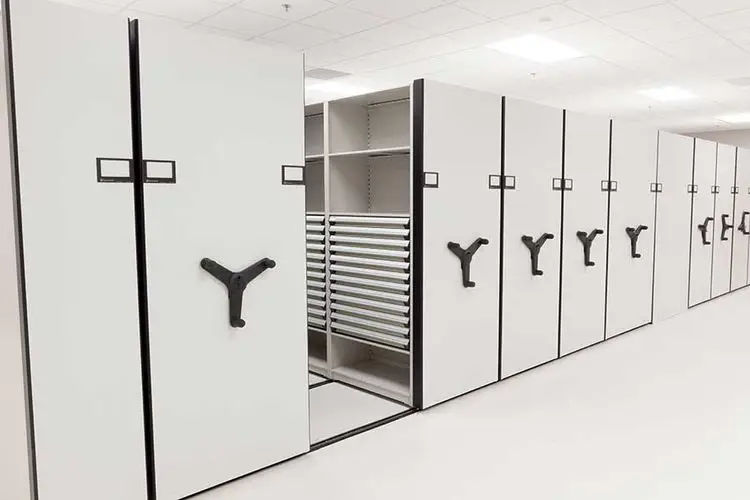
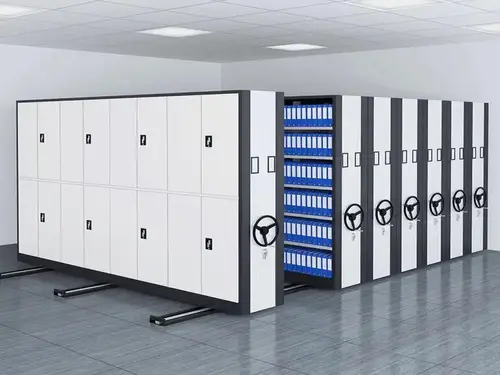
High-density mobile shelving is a storage system in which shelving rows are mounted on movable bases. Unlike ordinary steel shelving with fixed rows and permanent aisles, mobile shelving allows users to open an aisle only when access is required.
This arrangement reduces unused aisle space and makes more of the room available for storage. Common applications include:
① Libraries: Storing books, reference materials, and collections.
② Archives and records rooms: Organizing files, folders, and archive boxes.
③ Schools: Managing teaching materials and administrative records.
④ Corporate offices: Storing contracts, financial documents, and archived business records.
The actual storage capacity depends on room dimensions, shelving configuration, and access requirements.
2. Manual vs. Electric Mobile Shelving
The operating method affects purchase costs, daily convenience, and maintenance. Manual and electric mobile shelving both provide high-density storage but suit different operating conditions.
Manual Mobile Shelving
Manual mobile shelving typically uses a handwheel and mechanical transmission to move shelving rows along their tracks. Users operate the handwheel to open the required aisle.
Its main advantages are straightforward operation and no dependence on electricity for normal movement. It suits facilities with moderate access frequency and a preference for a simpler mechanical system.
However, the effort required depends on the shelving load, row configuration, and system design. Consider how often staff need to open aisles and whether manual operation is practical for daily use.
Electric Mobile Shelving
Electric mobile shelving uses motorized movement to open and close aisles, usually through buttons or a control panel. It reduces physical effort and is suitable for facilities with frequent access or extensive shelving installations.
However, electric systems involve additional power and maintenance requirements. Buyers should also clarify how the system is handled during a power outage rather than assuming backup power or manual override is included.
Which System Should You Choose?
① Budget: Manual systems generally have simpler mechanisms, while electric systems involve additional motorized and electrical components.
② Storage scale: Row length, total load, and system configuration all influence the suitable operating method.
③ Daily workload: Manual systems require physical operation. Electric systems reduce effort when aisles are opened frequently.
④ Power availability: Manual systems do not depend on electricity for normal movement. Electric systems require appropriate power arrangements and outage procedures.
⑤ Maintenance: Manual systems require mechanical maintenance, while electric systems also involve motors and electrical controls.
Neither option is automatically better. The right choice depends on usage frequency, budget, installation conditions, and maintenance resources.
3. How to Plan the Storage Layout
Before selecting a configuration, facility managers and designers should assess the room and establish a practical layout.
① Survey the available space. Measure the room's length, width, and clear height. Record the positions of doors, windows, columns, ceiling services, and other obstacles that could affect installation.
② Match shelving to stored materials. Books, files, and archive boxes have different dimensions and weights. Shelf depth, spacing, and usable height should match the actual materials rather than a rough estimate of the number of shelving units.
③ Plan for daily access. Consider which materials staff retrieve most frequently and whether they need to move carts or transport boxes through the aisles. Required emergency exits and access routes must remain clear.
④ Allow for future growth. Libraries and archives often accumulate materials over time. Planning for additional storage reduces the need for premature reorganization.
A good layout balances storage capacity, accessibility, and room conditions instead of simply maximizing the number of shelving rows.
4. What to Check Before Purchasing
Once the layout requirements are established, procurement teams should review the commercial and technical details before placing an order.
Total Project Cost
Compare the full project cost rather than the equipment price alone. Delivery, installation, floor preparation, electrical work where required, and maintenance all affect the budget. Check quotations carefully to understand which services are included.
Load Capacity and Acceptance
Request specifications for shelf load capacity and overall system loading. The building owner or responsible structural professional should verify that the floor can support the proposed installation.
Clarify responsibilities for floor assessment, installation quality, operational testing, and final acceptance before the project begins. Agreeing on these details helps prevent disputes and delays during handover.
Safety and Local Compliance
The system and installation must comply with applicable local fire and safety codes. Emergency exits, clearances, and access routes must remain unobstructed.
For electric mobile shelving, confirm the safety features included in the selected configuration. Depending on the design, these may include emergency stops, aisle-entry protection, or obstacle detection. Always check the actual specifications.
Warranty and Maintenance
Review warranty coverage, maintenance requirements, and replacement-part availability. For overseas projects, clarify the scope of technical support and how servicing will be handled after installation.
5. Common Mistakes to Avoid
① Ignoring floor load capacity: The installation may require expensive structural reinforcement or prove unsuitable after delivery. Check the building conditions before ordering.
② Overlooking emergency clearances: A layout that blocks required exits can fail fire and safety inspections, resulting in redesign and additional costs.
③ Ignoring power outage procedures: Unclear emergency arrangements can disrupt access to stored materials when an electric system loses power.
④ Skipping the site survey: Columns, doorways, or ceiling services may interfere with installation, causing delays and extra costs.
⑤ Comparing quotations on price alone: Different offers may cover different installation, warranty, and maintenance services. Compare the full scope.
⑥ Ignoring future storage demand: A system that reaches capacity too quickly may require costly changes sooner than expected.
Addressing these issues before ordering helps reduce installation risks and avoid unnecessary project costs
Conclusion
Bestal Furniture offers steel storage solutions for different organizational needs. When comparing high-density mobile shelving for a library, archive, or records room, consider your available space, storage volume, access frequency, and budget.
Contact Bestal Furniture to discuss your requirements and request product information or a quotation. Understanding your needs helps you compare suitable options and make a more informed purchasing decision.
Frequently Asked Questions
What is the main advantage of high-density mobile shelving?
It reduces the need for permanent aisles between shelving rows, allowing more floor space to be used for storage. Actual capacity depends on the room layout and system configuration.
Is manual or electric mobile shelving better?
Manual systems suit facilities where straightforward mechanical operation meets daily needs. Electric systems reduce physical effort and suit frequent access. Budget, maintenance, and power availability should guide the decision.
Can mobile shelving be retrofitted into an existing room?
Yes, provided the room and floor conditions are suitable. The installation must account for room dimensions, floor load capacity, track requirements, access routes, and local safety codes.
What safety features should I require for electric mobile shelving?
Requirements depend on the system design and local regulations. Ask the supplier about emergency stops, aisle-entry protection, and obstacle detection, and confirm which features are included.