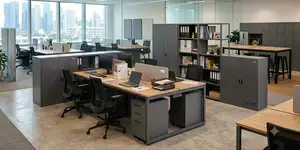
Offices handle more than just paperwork. Contracts, folders, reference materials, office supplies, and personal belongings all need suitable storage. When these items are scattered across desks or placed in unsuitable cabinets, workspaces become cluttered and important materials are harder to locate.
File cabinets provide organized storage for different office needs. However, not every cabinet serves the same purpose. Some are designed for larger volumes of documents, while others use glass doors for visibility or sliding doors to make better use of limited space. Understanding these differences helps businesses choose practical storage for their workplaces.
1. General Office Storage for Files and Supplies
Office departments often need to store a mixture of documents, folders, stationery, and other everyday supplies. Small desk storage may not be enough, especially when several employees share an office or a department handles a large volume of materials.
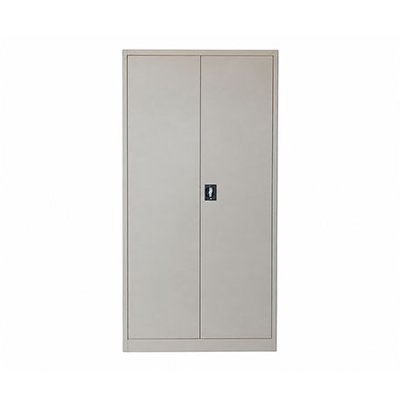
A high-capacity 2-door steel office storage cabinet provides enclosed storage for larger quantities of office items. Its two-door design gives users access to the cabinet interior, making it suitable for keeping files, folders, office supplies, and other materials together rather than spreading them across different work areas.
This type of cabinet works well in administrative offices, meeting areas, and shared workspaces where centralized storage is needed. It is particularly useful when businesses want to keep less frequently used materials out of sight while maintaining an organized office environment.
2. File Cabinets for Easy Viewing and Access
In some workplaces, employees need to identify stored materials quickly without opening several cabinets. Reference documents, folders, books, and frequently used office materials are easier to manage when their contents can be seen.
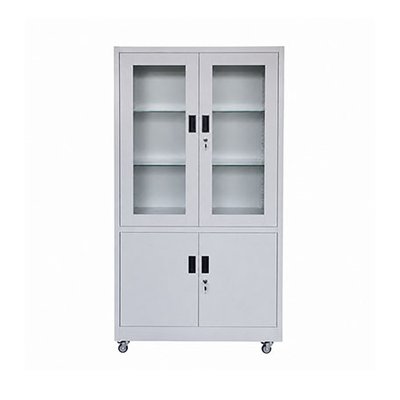
Glass-door file cabinets are suitable for these situations. They combine enclosed storage with visibility, allowing users to check what is inside while keeping materials arranged behind cabinet doors.
Bestal offers several glass-door designs for different office layouts:
① Sliding Glass Door Steel Filing Cabinet: Suitable for offices that need visible storage while making efficient use of the space in front of the cabinet.
② Full Glass Swing Door File Cabinet With Wheels: Provides a full glass front for viewing stored materials, while its wheels allow the cabinet to be repositioned when needed.
③ Top Glass Swing Door File Cabinet With Casters: Combines a glass-front upper section with a mobile design, making it useful for keeping selected office materials visible and accessible.
These cabinets can be used for reference files, folders, books, catalogs, and general office materials. They are particularly suitable for shared offices, administrative areas, and workspaces where employees regularly refer to stored items.
3. File Cabinets for Offices with Limited Space
Not every office has enough room for cabinet doors to swing outward freely. In narrow work areas or offices with cabinets placed close to desks and walkways, door movement can interfere with everyday activities.
Sliding-door and tambour-door cabinets offer alternative ways to access stored items without requiring the same outward door clearance as conventional swing doors.
A Tambour Door File Cabinet is suitable for storing office files, folders, and supplies in areas where saving opening space is important. Its tambour-style door provides access to the cabinet interior without a conventional swing door extending into the surrounding area.
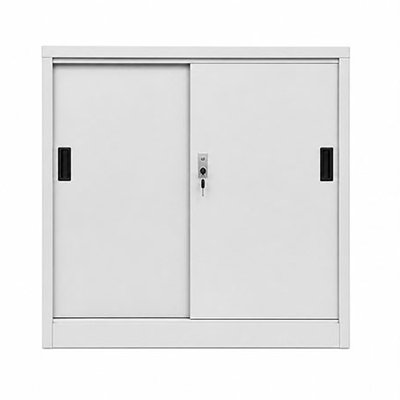
Similarly, a Lower Sliding Door Steel Filing Cabinet provides enclosed storage with a sliding-door design. It can be used for documents and office materials that need a designated storage area without adding unnecessary obstruction to nearby workspaces.
These cabinet styles are worth considering for compact offices, shared work areas, and spaces where furniture needs to be arranged efficiently.
4. Steel Cabinets for Shared Workspaces and Staff Areas
Some office storage needs go beyond documents. Staff areas and shared workplaces also require space for personal belongings, work-related items, and general supplies. Keeping these materials separate from active workstations helps maintain a tidier environment.
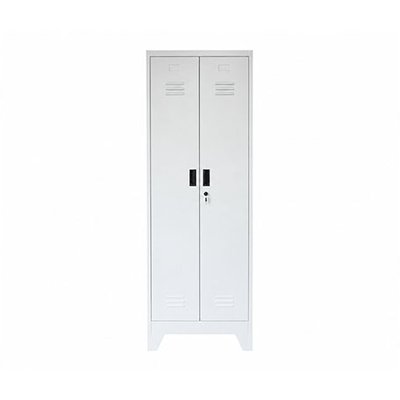
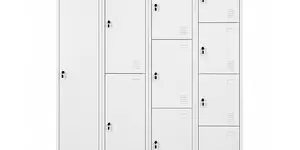
A 2-Door Steel Wardrobe With Feet is suitable for storing personal belongings, clothing, or other items that employees need to keep at work. Its wardrobe-style design makes it different from cabinets intended mainly for filing documents.
Other steel storage cabinets can support general workplace organization. For example, the Lower Swing Door Steel Cabinet provides enclosed storage for office supplies, files, and miscellaneous materials that need to be kept together. It can be used in administrative areas, shared offices, or other workplace settings where additional storage is required.
Choosing separate storage for documents, personal items, and general supplies helps reduce clutter and makes shared spaces easier to manage.
5. Matching Cabinet Designs to Different Storage Needs
The cabinet door design affects how people access stored materials and how the unit fits into a workspace. When comparing file cabinets, it is useful to consider the practical differences:
① Two-door steel cabinets: Suitable for centralized storage of larger quantities of office materials and supplies.
② Glass-door cabinets: Useful when employees need to see stored documents or reference materials.
③ Sliding-door cabinets: Suitable for areas where outward-opening doors could interfere with nearby furniture or walkways.
④ Tambour-door cabinets: Offer another space-conscious option for accessing enclosed storage.
⑤ Mobile cabinets: Models with wheels or casters can be repositioned when workspace arrangements change.
⑥ Wardrobe-style cabinets: Better suited to clothing and personal belongings than ordinary document filing.
The best design depends on what the cabinet will store, where it will be placed, and how frequently employees need to access its contents.
6. What to Consider When Choosing a File Cabinet
Before purchasing, businesses should consider a few practical points:
① Storage purpose: Decide whether the cabinet will hold documents, folders, office supplies, or personal belongings.
② Door design: Choose between swing, sliding, glass, and tambour doors based on access habits and available space.
③ Cabinet placement: Consider the surrounding desks, walkways, and other furniture.
④ Visibility and security: Glass doors make contents easier to identify, while enclosed steel doors keep stored items out of direct view.
Matching the cabinet design to its intended use helps create a more functional storage arrangement.
7. Conclusion
File cabinets support a wide range of workplace storage needs. Two-door steel cabinets provide space for general office materials, glass-door designs make stored items easier to identify, and sliding or tambour doors suit areas where opening space is limited. Wardrobe-style cabinets also provide a practical option for staff belongings.
At Bestal Furniture, we offer different steel file cabinet designs for office document storage and general workplace organization. Contact us to explore our file cabinet range and find suitable storage options for your business.