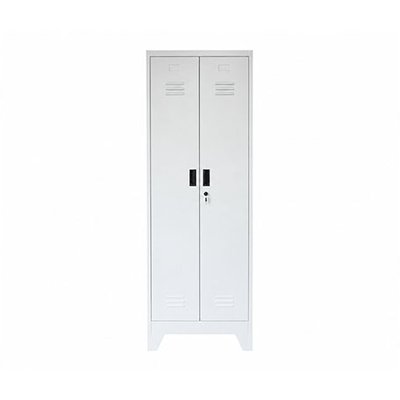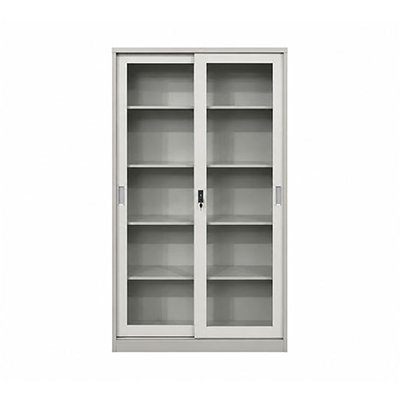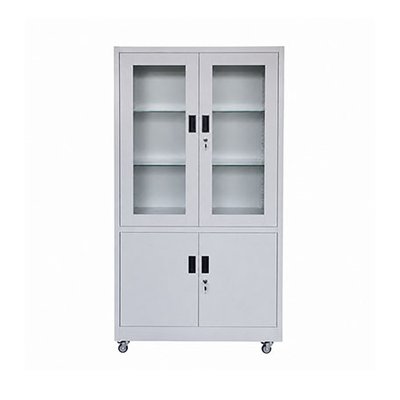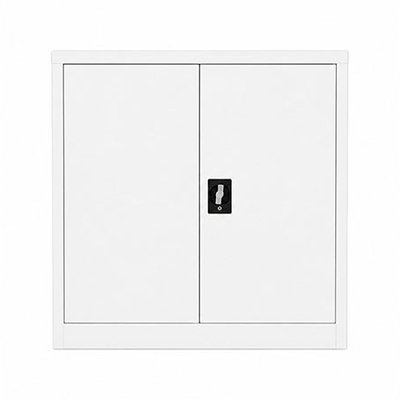
In today’s business landscape, "cookie-cutter" office furniture is increasingly a thing of the past. More and more enterprises recognize the need for office furniture that precisely aligns with their operational requirements, brand identity, and spatial constraints. For companies that seek a harmonious blend of durability, functionality, and aesthetics—while also prioritizing long-term cost-effectiveness—custom steel office furniture has become the ideal choice.
According to industry data, customized office furniture orders now account for more than 35 percent of total industry order volume, a figure that continues to climb as businesses prioritize flexibility and personalization. The global steel furniture market is projected to grow from USD 20.5 billion in 2025 to USD 30.5 billion by 2035, underscoring the sustained demand for steel-based solutions across commercial, institutional, and public sectors.
This comprehensive guide walks you through the complete steel office furniture customization process—from initial consultation through to installation and after-sales support—so you understand exactly what to expect and how to make informed decisions at every stage.
Why Choose Custom Steel Office Furniture?
Before diving into the process itself, it is worth understanding why steel office furniture customization has become such a compelling option for businesses of all sizes.
Superior durability and longevity set steel furniture apart from its wooden or particleboard counterparts. Cold-rolled steel, the material of choice for quality manufacturers, offers exceptional structural integrity and resistance to wear, scratch, and impact. For high-traffic office environments, this translates into furniture that maintains its appearance and functionality for decades rather than years.
Design flexibility is another major advantage. Steel can be fabricated into virtually any shape or configuration, accommodating everything from minimalist modern workstations to complex storage systems. Manufacturers can customize dimensions, colors (using the RAL color system), lock systems, internal layouts, and even incorporate branding elements such as logo embossing.
Space optimization becomes significantly easier with custom solutions. Standard off-the-shelf furniture often leaves awkward gaps or fails to utilize vertical space effectively. Custom steel furniture fits your exact floor plan, maximizing every square meter of your office.
Long-term cost-effectiveness may surprise those who assume customization is always more expensive. While custom pieces typically carry a 20 to 30 percent premium over standard products, this investment pays dividends through extended lifespan, reduced replacement frequency, and perfect space utilization that eliminates wasteful purchases.
Steel Office Furniture Customization Process
Stage 1: Before Customization
Before customization begins, a comprehensive understanding of your requirements is essential. The company will assign a professional designer to conduct an in-depth consultation covering several key aspects.
Space measurement and site survey form the foundation of this stage. Professional teams measure your office space with precision down to the centimeter, documenting the positions of columns, doors, windows, electrical outlets, network points, and air conditioning outlets. They also assess access constraints such as elevator dimensions, stairwell widths, and doorway clearances to ensure finished furniture can actually reach its intended location.
Functional requirements analysis examines how your employees actually work. Research-oriented staff may need larger desktops with higher weight capacity (80 kilograms or more), while administrative roles typically benefit from enhanced storage solutions such as mobile pedestals and side cabinets. Management positions often require integrated cable management and height-adjustable features.
Style and brand alignment ensures your furniture reflects your corporate identity. Designers discuss color schemes, finish preferences, and overall aesthetic direction to create cohesion with your existing office design language.
Budget and timeline discussion establishes realistic expectations. Quality manufacturers provide transparent, itemized quotations that separate material costs, production expenses, transportation, installation fees, and design charges. They also clarify lead times, expedite fees, and modification costs upfront to prevent surprises later.
Stage 2: Design and Scheme Development
Once requirements are clearly defined, the design team translates your vision into tangible plans.
CAD modeling and 3D renderings bring concepts to life. Designers use Computer-Aided Design software to create detailed blueprints and three-dimensional visualizations that show exactly how the finished furniture will look and function within your space. These renderings allow you to visualize proportions, colors, and spatial relationships before any materials are cut.
Material and finish selection involves choosing the specific steel grade, thickness, and surface treatment. Quality manufacturers typically use cold-rolled steel with a minimum thickness of 0.8 millimeters for standard components and 1.0 millimeters or more for load-bearing parts. Surface finishing options include electrostatic powder coating—the industry standard for its durability, environmental friendliness, and corrosion resistance—as well as galvanized steel for enhanced anti-rust protection in demanding environments.
Hardware and accessory specification determines the functionality and user experience of the finished product. Reputable manufacturers use established brand hardware such as DTC or Hettich slides and hinges, with load capacities of 30 kilograms or more. Lock systems, handles, and any smart features such as height-adjustment motors or wireless charging modules are specified at this stage, complete with technical parameters and test reports.
Multiple revision rounds are typically part of the process. The core advantage of customization lies in its flexibility—suppliers should support several rounds of scheme modifications until your requirements are fully met. Only after you confirm satisfaction with the design does the project move to production.
Stage 3: Material Preparation and Production
With designs finalized and contracts signed, manufacturing commences. This is where the technical expertise of the manufacturer truly matters.
Raw material procurement begins with sourcing high-quality cold-rolled steel coils from certified suppliers. Incoming inspection verifies that materials meet relevant national standards before any processing begins.
Cutting and shaping transforms flat steel sheets into component parts. Modern facilities employ laser cutting technology for precision and consistency. Shearing machines, punching presses, and CNC equipment work in sequence to create parts with exact dimensions and clean edges.
Bending and forming uses hydraulic press brakes and automatic benders to shape steel into the required profiles—whether for desk frames, cabinet bodies, or shelving supports.
Welding and joining assembles individual components into unified structures. Automatic welding machines ensure consistent, strong joints. Skilled craftspeople may perform additional manual welding for complex or custom elements. Weld points should be smooth, free from slag and burrs, with exposed corners rounded (radius of 3 millimeters or more) to prevent injury.
Surface preparation is critical for finish quality and longevity. Steel parts undergo cleaning to remove oils, dust, and contaminants, followed by phosphating treatment that enhances corrosion resistance and creates an optimal surface for coating adhesion.
Electrostatic powder coating applies a dry powder that is electrostatically charged and sprayed onto the grounded steel surface. The coated pieces are then conveyed through a curing oven where heat melts the powder, causing it to flow and chemically cross-link into a continuous, hard, and durable film. This process produces a uniform finish without bubbles, drips, or runs, and the coating must pass adhesion tests such as cross-cut testing.
Assembly and final fitting brings everything together. Drawer systems, handles, locks, glass panels, and any other components are installed. Adjustable features are calibrated, and the finished product undergoes final inspection before packaging.
Stage 4: Quality Control Throughout Production
Quality assurance is not a single event but an ongoing process integrated into every production stage.
First article inspection occurs at the beginning of each production stage. Inspectors examine the first three products from any new production run against established criteria. If any non-conformances are found, the process is adjusted and re-inspected until quality standards are met before mass production proceeds.
In-process mutual inspection means operators in each production stage check components received from the previous stage, ensuring defects are caught and corrected early rather than discovered at the end.
Random spot checks conducted by professional quality inspectors throughout production verify that processes remain under control.
Final comprehensive inspection examines finished products for dimensional accuracy (tolerance of plus or minus 3 millimeters is standard), surface finish quality, structural stability, and complete accessory installation. Products may also undergo load testing, corrosion resistance testing, and other performance verifications.
Stage 5: Packaging, Delivery, and Installation
The final journey from factory to your office requires careful planning and professional execution.
Protective packaging prevents damage during transportation. Packaging structures are professionally designed and optimized for each product type, with special attention to protecting vulnerable components such as glass panels and delicate finishes.
Logistics coordination ensures timely delivery. Manufacturers with integrated supply chains can typically deliver custom orders within 15 to 25 days, with sample orders available in 3 to 10 days.
Professional installation teams handle on-site assembly. They place and assemble furniture according to design drawings, ensuring levelness, verticality, and proper alignment. Adjustable functions such as height-adjustable desks and ergonomic features are tested and calibrated. Installation teams clean up debris and restore the workspace to a tidy condition.
User training and documentation complete the handover. The manufacturer shall provide an operation manual and maintenance guidelines, and instruct staff on how to use the furniture's adjustable features and perform routine maintenance.
Stage 6: After-Sales Service and Warranty
The relationship between you and your furniture manufacturer should not end with installation.
Comprehensive warranty coverage typically includes five years or more for the overall product, with ten years or more for core components such as locking mechanisms and lift motors. During the warranty period, manufacturers provide free repair or replacement for any quality-related issues.
Lifetime maintenance support ensures ongoing performance.Reputable manufacturers provide lifetime maintenance services and respond promptly to service requests.
Periodic inspections and maintenance may be offered as part of premium service packages, helping identify and address minor issues before they become significant problems.
Current Trends Shaping Steel Office Furniture Customization
Understanding industry trends helps you make forward-looking decisions that keep your workspace relevant for years to come.
Modular and flexible configurations are increasingly in demand. Companies prioritize furniture that adapts to changing team sizes and workspace layouts. Modular steel cabinets, mobile pedestals, and easily repositioned storage units allow rapid reconfiguration without sacrificing durability.
Higher design expectations accompany the traditional demand for durability. Buyers now expect refined details such as smooth soft-close rails, clean minimalist handles, flush doors, and improved noise reduction features. Steel furniture is increasingly meeting the visual expectations of contemporary office design while maintaining its commercial-grade strength.
Smart furniture integration is a rapidly growing segment. Wireless charging, intelligent height adjustment, power management, and connectivity with smart devices are becoming standard features in premium custom steel furniture. Industry projections suggest smart steel office furniture could capture more than 20 percent of the market within the next three to five years.
Sustainability focus drives material and process choices. Custom solutions increasingly use recyclable materials, environmentally friendly powder coatings, and low-carbon manufacturing processes that align with corporate sustainability goals.
Whether you are outfitting a new office, renovating an existing space, or expanding your business, a thorough understanding of the comprehensive customization process will empower you to make confident decisions and achieve ideal results that serve your enterprise for the long term.